Loading artist

Myles Birket Foster
Biography
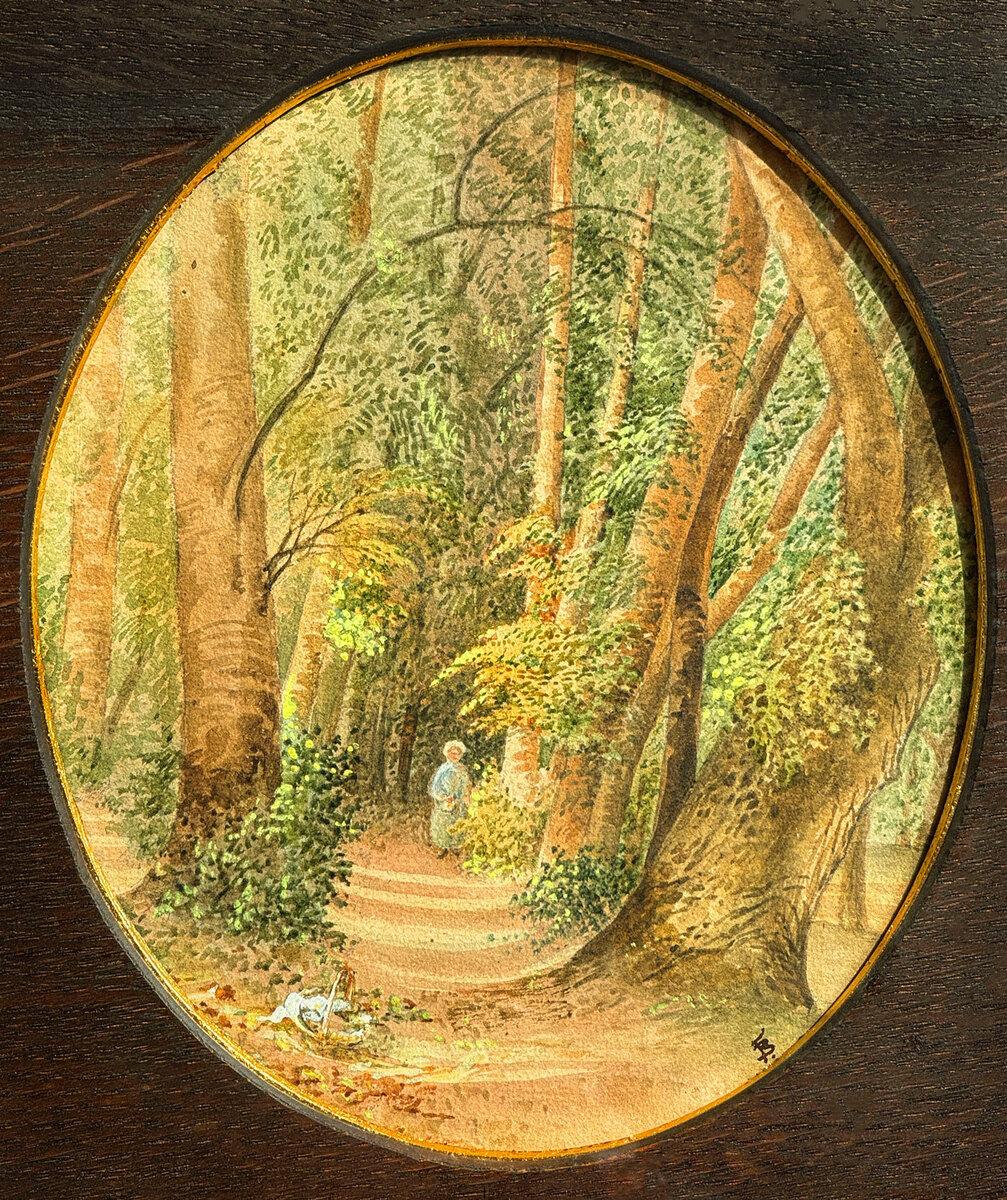
Myles Birket Foster was born in North Shields, Northumberland in England in February 1825. He was known as an engraver and illustrator as well as a highly regarded watercolour artist, and at one point in his career was considered one of the most successful watercolour artists in England, with his work admired by many leading artists of his day. In 1830 when he was 5 years old Birket Forster’s family moved to London and his father founded M.B. Foster & Sons, a successful beer-bottling company. After school, Birket Froster joined the family business. However, his father noticed his son’s talent for art and secured him an apprenticeship when he was 16 years old with the wood-engraver Ebernezer Landells. Birket Foster then worked on illustrations for “Punch” Magazine and the “Illustrated London News”, making and drawing woodcuts, which he did with great finesse. After mastering the art of wood engraving, Birket Foster concluded his apprenticeship with Landells and continued to produce work for the “Illustrated London News” and the “Illustrated London Almanack”, also finding work as a book illustrator. His famous image of "A Christmas Holly Cart" was used by the new traders of seasonal cards and was included in the “Illustrated London News” by the end of 1848. During the 1850s, Birket Foster trained himself to paint in watercolours. From 1858, he gave up his successful career as a book illustrator and concentrated entirely on watercolour painting, becoming a regular exhibitor with the Society of Painters in Water Colours. His watercolour illustrations of poet Henry Wadsorth Longfellow’s heroine “Evangeline” and illustrations in other books were a great success, and he quickly became a successful watercolour artist, known for his use of minutely stippled brushstrokes and abundant use of bodycolour. Birket Foster married on 13 August 1850, to Anne who was the daughter of Robert Spence of North Shields, a descendant of Robert Foster of Hebblethwaite Hall and hailing from hilltop gentry farming stock. Bringing a dowry and money to London, the newly wed couple moved into a salubrious address on the edge of London at Clifton Hill in the fashionable district of St Johns Wood. Birket Foster became an Associate of the "Old" Watercolour Society (later known as the Royal Watercolour Society) in 1860 and exhibited about 400 of his paintings at the Royal Academy in London for more than two decades. He travelled widely, painting the countryside around Scotland, the Rhine Valley, the Swiss lakes and in Italy, especially Venice. By 1863, Birket Foster was receiving considerable patronage and by now very wealth and in that year he built an elaborate Tudor-style residence in Witley, Surrey, called “The Hill”, which was decorated by his artist and decorator friends, William Morris and Edward Burne-Jones. The same year he published a volume of "English Landscapes," with text by Tom Taylor. Although already successful, after moving to Witley Birket Foster created the works for which he became best known - sentimentalised views of the contemporary English countryside, particularly in the west Surrey area. Inspired by the Surrey countryside, his watercolours were often painted on an uncommonly large scale for the medium, combining carefully modelled figures and intricate details with broadly washed skies and backgrounds. Although criticised for their idealised view of rural life, Birket Foster’s watercolours were recognised for their detail and execution. His paintings, (along with that of other artists) were used by Cadbury’s, on the lids of their chocolate boxes from the 1860s onwards. In 1883, Birket Foster was commissioned by the trustees of the Art Gallery of New South Wales to produce a watercolour “Barking, Springtime” which, when completed in 1887, was highly praised in the Australian press as ranking amongst Birket Foster’s finest works. Birket Foster became ill in 1893 and moved to Weybridge where he continued to paint until he passed away on 27 March 1899. His obituary in “The Times” newspaper referred to him as "certainly the most popular watercolour artist of our time". Myles Birket Foster is buried at All Saints’ Church in Witley, United Kingdom. His paintings are held in the collections of many museums and public galleries.